Climate crisis: 11,000 scientists warn of ‘untold suffering’
Denial is a coverup.
The party of denial is the party of triumphant selfishness on a sociopathic scale.
The very thing that makes democratic socialism utterly impossible and social democracy a heck of a push.
Denial is a coverup for that selfishness.
"Untold suffering?
"Yeah, but not mine.
"Not my problem, compadre."
Showing posts with label egoism. Show all posts
Showing posts with label egoism. Show all posts
Tuesday, November 5, 2019

Wednesday, July 10, 2019
Let them die!
Everybody heard it.
At a GOP forum, during discussion of trying to overthrow Ocare, a panelist asked what to do about those who depended on Ocare, whose lives would be put at risk.
Someone in the audience called out "Let them die!"
Democrats have used this episode to good effect.
All the same, they themselves are perfectly clear that politics is mostly about people voting "the pocket-book", "the family budget", or "the wallet".
And they alternately complain or marvel that so many working class people vote for Republicans in pretty clear defiance of their own best interests.
Pretty much everyone in America not living under a bridge could give to charities in such a way that lives would be saved, somewhere, without himself dying of the sacrifice, or even shortening his life.
Indeed, according to utilitarian liberal morality guru, Peter Singer, everyone has a moral duty to give until he personally is no better off than the least well off person in the entire world.
(He has never followed his own counsel.)
So imagine that everyone has a moral duty to give until everyone in the world in danger of dying within the next year is made safe for that long, so long as neither he (the giver) nor anyone in his immediate sphere of concern loses a moment of life by it.
Sound right?
So, has it happened yet?
Has every American, has any American, done anywhere near that much to save the dying?
No?
So, let them die, huh?
Think about that willingness to allow, what, actual millions of unnecessary deaths, worldwide.
In view of that, is it any surprise Americans - like everyone else, really - are so uninterested in making sacrifices to mitigate the impact of climate change on Third World countries, or worldwide coastal dwellers, or even American coastal dwellers?
Or to "save the planet" for future generations of humans, their own descendants included?
Maybe those folks still living in New Orleans should just move to higher ground, eh?
PS.
Every moral theory other than act utilitarianism denies any very strict or very extensive obligations of charity at all.
None remotely as extensive as what Singer so absurdly proposed.
After all, as Clough had it,
Thou shalt not kill
But needst not strive
Officiously to keep alive.
At a GOP forum, during discussion of trying to overthrow Ocare, a panelist asked what to do about those who depended on Ocare, whose lives would be put at risk.
Someone in the audience called out "Let them die!"
Democrats have used this episode to good effect.
All the same, they themselves are perfectly clear that politics is mostly about people voting "the pocket-book", "the family budget", or "the wallet".
And they alternately complain or marvel that so many working class people vote for Republicans in pretty clear defiance of their own best interests.
Pretty much everyone in America not living under a bridge could give to charities in such a way that lives would be saved, somewhere, without himself dying of the sacrifice, or even shortening his life.
Indeed, according to utilitarian liberal morality guru, Peter Singer, everyone has a moral duty to give until he personally is no better off than the least well off person in the entire world.
(He has never followed his own counsel.)
So imagine that everyone has a moral duty to give until everyone in the world in danger of dying within the next year is made safe for that long, so long as neither he (the giver) nor anyone in his immediate sphere of concern loses a moment of life by it.
Sound right?
So, has it happened yet?
Has every American, has any American, done anywhere near that much to save the dying?
No?
So, let them die, huh?
Think about that willingness to allow, what, actual millions of unnecessary deaths, worldwide.
In view of that, is it any surprise Americans - like everyone else, really - are so uninterested in making sacrifices to mitigate the impact of climate change on Third World countries, or worldwide coastal dwellers, or even American coastal dwellers?
Or to "save the planet" for future generations of humans, their own descendants included?
Maybe those folks still living in New Orleans should just move to higher ground, eh?
PS.
Every moral theory other than act utilitarianism denies any very strict or very extensive obligations of charity at all.
None remotely as extensive as what Singer so absurdly proposed.
After all, as Clough had it,
Thou shalt not kill
But needst not strive
Officiously to keep alive.
Tuesday, July 9, 2019
You know, you may say you're a girl, but we both know you're not.
Actually, I sympathize with these bathroom bans.
Unenforceable (would door guards be posted to - ahem - frisk people at the entrances?) but good symbolism.
I am not in the least interested in licensing persecution of these folks, but such bans are not persecution.
GOP House nominee compares his anti-LGBTQ bigotry to saving Jews from the Holocaust
Likewise, I oppose and deplore as absurd mockery gay marriage.
But these are not half so serious to me as my opposition to abortion.
And yet none of these individually, nor all of them collectively, are deal breakers for me.
On social as well as class issues, voters are faced with two opposing teams increasingly committed to extremes.
One party favors abortion on demand for the whole term of the pregnancy and is apt to favor infanticide on demand as soon as they dare, while the other favors a nearly total prohibition of abortion and would never in human imagination favor infanticide.
I am closer to the Republicans; forced to choose I will choose their position.
One party favors gay marriage, adoption by same-sex couples, women in combat, and even greater absurdities in deference to sexual outlawry, post-modernist feminism, and gender revolutionism while the other would turn back the clock on the law regarding all things sexual to 1950.
I am about equidistant from both, though I find the Dem position far less cruel though much more absurd.
Forced to choose I will choose the Dems position.
With the GOP and increasingly against the Dems I favor capital punishment and long sentences.
To my knowledge there is not any actual, formal issue position of the contemporary GOP regarding race that I do not agree with.
I would prefer that whites remain a politically dominant demographic majority in the US, since I have no wish that I, my family members, or my near descendants suffer the greater or lesser indignities of minority status.
Sometimes I sympathize with the libertarian view that private economic agents ought not to be subject to government-enforced nondiscrimination.
And I generally sympathize with the legal toleration of racially, religiously, or otherwise exclusive private clubs, such as men-only or whites-only country clubs.
I am pro-capitalism (and anti-socialism and anti-Communism) without being personally a capitalist, and favor the careful sort of free-trade/fair-trade, globalizing deals favored by O and Hillary and center-left Democrats as well as Republicans.
And I would much prefer the American security forces use torture, if necessary (and useful), to prevent a serious radiological, let alone a genuine nuclear, attack on the US, or maybe on anyone, though I would also prefer that the police eschew it and not return to the third degree as a tool for choking out false confessions in preference to actually trying to find out and punish the truly guilty.
Forced to choose, I prefer a system in which education is overwhelmingly in private hands, and some of it religiously affiliated in one way or another, rather than that education be overwhelmingly - much less entirely - in the hands of state agencies committed to an official view of anything or an official secularism.
Why do I vote for Democrats, every single time?
Because they have built and today defend over a century of progressive achievements in aid of the common people nearly all of which have benefitted, do benefit, or will benefit myself and my wife and my immediate - however stupidly ungrateful - family.
While Republicans have opposed those achievements every step of the way and to this day would tear them all down if they could, putting myself, my wife, and my immediate family in a perilous fix.
Why am I a registered Democrat?
So I can vote in my state's closed primaries.
Unenforceable (would door guards be posted to - ahem - frisk people at the entrances?) but good symbolism.
I am not in the least interested in licensing persecution of these folks, but such bans are not persecution.
GOP House nominee compares his anti-LGBTQ bigotry to saving Jews from the Holocaust
Likewise, I oppose and deplore as absurd mockery gay marriage.
But these are not half so serious to me as my opposition to abortion.
And yet none of these individually, nor all of them collectively, are deal breakers for me.
On social as well as class issues, voters are faced with two opposing teams increasingly committed to extremes.
One party favors abortion on demand for the whole term of the pregnancy and is apt to favor infanticide on demand as soon as they dare, while the other favors a nearly total prohibition of abortion and would never in human imagination favor infanticide.
I am closer to the Republicans; forced to choose I will choose their position.
One party favors gay marriage, adoption by same-sex couples, women in combat, and even greater absurdities in deference to sexual outlawry, post-modernist feminism, and gender revolutionism while the other would turn back the clock on the law regarding all things sexual to 1950.
I am about equidistant from both, though I find the Dem position far less cruel though much more absurd.
Forced to choose I will choose the Dems position.
With the GOP and increasingly against the Dems I favor capital punishment and long sentences.
To my knowledge there is not any actual, formal issue position of the contemporary GOP regarding race that I do not agree with.
I would prefer that whites remain a politically dominant demographic majority in the US, since I have no wish that I, my family members, or my near descendants suffer the greater or lesser indignities of minority status.
Sometimes I sympathize with the libertarian view that private economic agents ought not to be subject to government-enforced nondiscrimination.
And I generally sympathize with the legal toleration of racially, religiously, or otherwise exclusive private clubs, such as men-only or whites-only country clubs.
I am pro-capitalism (and anti-socialism and anti-Communism) without being personally a capitalist, and favor the careful sort of free-trade/fair-trade, globalizing deals favored by O and Hillary and center-left Democrats as well as Republicans.
And I would much prefer the American security forces use torture, if necessary (and useful), to prevent a serious radiological, let alone a genuine nuclear, attack on the US, or maybe on anyone, though I would also prefer that the police eschew it and not return to the third degree as a tool for choking out false confessions in preference to actually trying to find out and punish the truly guilty.
Forced to choose, I prefer a system in which education is overwhelmingly in private hands, and some of it religiously affiliated in one way or another, rather than that education be overwhelmingly - much less entirely - in the hands of state agencies committed to an official view of anything or an official secularism.
Why do I vote for Democrats, every single time?
Because they have built and today defend over a century of progressive achievements in aid of the common people nearly all of which have benefitted, do benefit, or will benefit myself and my wife and my immediate - however stupidly ungrateful - family.
While Republicans have opposed those achievements every step of the way and to this day would tear them all down if they could, putting myself, my wife, and my immediate family in a perilous fix.
Why am I a registered Democrat?
So I can vote in my state's closed primaries.
Sunday, June 9, 2019
The Difference Principle
Rawls.
The difference principle is the second part of the second principle of John Rawls’s theory of justice.
The first principle requires that citizens enjoy equal basic liberties.
The first part of the second principle requires fair equality of opportunity.
These rules have priority over the difference principle; the difference principle cannot justify policies or institutions that abrogate them.
The difference principle governs the distribution of income and wealth, positions of responsibility and power, and the social bases of self-respect.
It holds that inequalities in the distribution of these goods are permissible only if they benefit the least well-off positions of society.
These are Rawls' offerings as principles of justice.
The most widely discussed theory of distributive justice in the past four decades has been that proposed by John Rawls in A Theory of Justice, (Rawls 1971), and Political Liberalism, (Rawls 1993).
Rawls proposes the following two principles of justice:
1. Each person has an equal claim to a fully adequate scheme of equal basic rights and liberties, which scheme is compatible with the same scheme for all; and in this scheme the equal political liberties, and only those liberties, are to be guaranteed their fair value.
2. Social and economic inequalities are to satisfy two conditions: (a) They are to be attached to positions and offices open to all under conditions of fair equality of opportunity; and (b), they are to be to the greatest benefit of the least advantaged members of society. (Rawls 1993, pp. 5–6. The principles are numbered as they were in Rawls’ original A Theory of Justice.)
Where the rules may conflict in practice, Rawls says that Principle (1) has lexical priority over Principle (2), and Principle (2a) has lexical priority over (2b).
It is his claim that justice requires observation of these principles.
Ignore, for the moment, the senselessness of moral claims of all sorts, including claims about what justice requires.
Is it really plausible that justice requires that any number of better off people be deprived of any amount of income or wealth to prevent deprivation of some or even all of the worse off, no matter how few they may be, of even the tiniest amounts of the same?
Apparently it was to Rawls, but it isn't and hasn't been to most others aware of the question.
No utilitarian would buy that.
And is it in the least credible that a representative flock of even no more than normally egoistic rational individuals would, in the fiction of the original position, choose a regime committed to this behind Rawl's veil of ignorance?
No, IMHO.
The difference principle is the second part of the second principle of John Rawls’s theory of justice.
The first principle requires that citizens enjoy equal basic liberties.
The first part of the second principle requires fair equality of opportunity.
These rules have priority over the difference principle; the difference principle cannot justify policies or institutions that abrogate them.
The difference principle governs the distribution of income and wealth, positions of responsibility and power, and the social bases of self-respect.
It holds that inequalities in the distribution of these goods are permissible only if they benefit the least well-off positions of society.
These are Rawls' offerings as principles of justice.
The most widely discussed theory of distributive justice in the past four decades has been that proposed by John Rawls in A Theory of Justice, (Rawls 1971), and Political Liberalism, (Rawls 1993).
Rawls proposes the following two principles of justice:
1. Each person has an equal claim to a fully adequate scheme of equal basic rights and liberties, which scheme is compatible with the same scheme for all; and in this scheme the equal political liberties, and only those liberties, are to be guaranteed their fair value.
2. Social and economic inequalities are to satisfy two conditions: (a) They are to be attached to positions and offices open to all under conditions of fair equality of opportunity; and (b), they are to be to the greatest benefit of the least advantaged members of society. (Rawls 1993, pp. 5–6. The principles are numbered as they were in Rawls’ original A Theory of Justice.)
Where the rules may conflict in practice, Rawls says that Principle (1) has lexical priority over Principle (2), and Principle (2a) has lexical priority over (2b).
It is his claim that justice requires observation of these principles.
Ignore, for the moment, the senselessness of moral claims of all sorts, including claims about what justice requires.
Is it really plausible that justice requires that any number of better off people be deprived of any amount of income or wealth to prevent deprivation of some or even all of the worse off, no matter how few they may be, of even the tiniest amounts of the same?
Apparently it was to Rawls, but it isn't and hasn't been to most others aware of the question.
No utilitarian would buy that.
And is it in the least credible that a representative flock of even no more than normally egoistic rational individuals would, in the fiction of the original position, choose a regime committed to this behind Rawl's veil of ignorance?
No, IMHO.
Thursday, April 19, 2018
Not so fast, my utilitarian friend
Societies A and B have the same population size at any given time.
In society A, people live for an average of 75 years.
In society B, people live for 35 years and are then killed by the government to make room for more young people.
Because younger people are happier than older people, the average utility of people living in society B is greater than that of people living in society A, though the utility of people in society A is generally positive throughout their lives.
And for the first 35 years of their lives, persons in society A are as happy as persons in society B.
So the total, lifelong happiness of people in society A is greater than the total, lifelong happiness of people in society B.
And no one in society A is deprived of a future they have every expectation would be happy by their government.
Egoists in the Original Position would surely choose A over B.
It is not true, as some utilitarian critics of Rawls claimed from the first, that each of us in such a position could be confident that the greater the average utility of the whole population the greater our own expectations.
In society A, people live for an average of 75 years.
In society B, people live for 35 years and are then killed by the government to make room for more young people.
Because younger people are happier than older people, the average utility of people living in society B is greater than that of people living in society A, though the utility of people in society A is generally positive throughout their lives.
And for the first 35 years of their lives, persons in society A are as happy as persons in society B.
So the total, lifelong happiness of people in society A is greater than the total, lifelong happiness of people in society B.
And no one in society A is deprived of a future they have every expectation would be happy by their government.
Egoists in the Original Position would surely choose A over B.
It is not true, as some utilitarian critics of Rawls claimed from the first, that each of us in such a position could be confident that the greater the average utility of the whole population the greater our own expectations.
Sunday, April 1, 2018
Socialism and terror
Thoroughgoing socialism is deeply contrary to the egoism of everybody who would have to staff it and run it, possibly including the highest political or other officials.
At best, it serves the egoism of the lower orders, and even that not necessarily, and not for long, better than progressive capitalism.
Hence, it cannot survive without terror.
Rule by terror under a savage, remorseless, and relentless dictatorship of an ideologically convinced party fully committed to just that.
And not indefinitely with such terror.
Hence its collapse in Russia and Eastern Europe.
Hence its abandonment in China.
It is incompatible with any form of free government.
Thursday, March 8, 2018
Self-Renunciation
Maggie discovers and falls in love with Thomas a Kempis' preaching of total rejection of self-love.
As the story continues, we see this is a profound, and profoundly painful and costly, renunciation on her part, of any aspirations to having a life of her own.
As the story continues, we see this is a profound, and profoundly painful and costly, renunciation on her part, of any aspirations to having a life of her own.
The Mill on the Floss.
The Valley of Humiliation, chapter 3.
Sunday, March 4, 2018
Moral individualism
"I will not harm or kill them for my advantage, or for that of anyone I especially care about.
"But they must not harm or kill me for the like reasons."
What egoists would agree to in the social contract.
It's not any style or variant of utilitarianism.
Under utilitarianism, individuals - people, that is to say - count for nothing.
To hell with that, says the egoist.
Sunday, December 31, 2017
A defense of optimism
Not Leibnitz's extravagance but the far more limited claim that "the good in this state of existence preponderates over the bad."
Charles Dickens, Nicholas Nickleby, 1839, chapter 6.
Schopenhauer's World as Will and Representation, was published in 1819.
Schopenhauer made an extravagant case that human life, at least, was for each and every one of us a losing game, on hedonist terms.
Historically, most hedonists, though not all - Google Hegesias, "the death persuader" - , have agreed with Epicurus and Henry Sidgwick against Schopenhauer that life is generally and for most of us, for a good while, at least, choiceworthy.
It has been speculated Hegesias was influenced by Buddhism.
About Schopenhauer there is no need for speculation.
(And a very amusing attack on aristocracy in the same chapter.)
Friday, July 7, 2017
Philosophers are the true flaneurs
"Anaxagoras used to say that he came into the world to admire the sun," explains the Skeptic Gringoire to Frollo, when the latter urges that he get himself hanged in Esmeralda's place - his latest plot to carry her off, though all unwilling, for himself.
Gringoire - Edmund O'Brien in the 1939 film - refuses, saying "I don't see why I should be hanged in another person's stead," and Frollo protests, "What makes you so fond of life?"
"Oh, a thousand things," answers Gringoire, in the manner of a man who has and needs nothing to live for, no "reason to live", no "cause greater than himself".
At the end of a list of examples including the air, the sky, and moonlight, and the reference to Anaxagoras, he says, "And besides, I have the pleasure of spending all my days, from morning till night, with a man of genius, to wit, myself, and that is a mighty agreeable thing."
And as to fate, an episode of Supernatural on Netflix has the Archangel Michael telling Dean he and Sam cannot avoid their destiny, "all roads lead to the same place."
That is one of at least three different ideas of fate, another being that you must do what is fated (or what is fated must befall), and the last merely that you will do it (or what is fated will befall).
The last is a consequence of logical determinism, the doctrine that all contingents, including future contingents, are true or else false.
Many philosophers consider it - but not the other two - a conception of fatalism compatible with human freedom of choice, though not all would say the same for causal determinism.
Reading The Hunchback.
Thursday, July 6, 2017
Interest and Eros
With Love, Nature gets us to sacrifice self-interest for the sake of reproduction.
But without Love, what would fill up our otherwise merely interested lives?
Only Strife, then, would make up the human adventure.
Strife and the relentless prose of work.
And what joys could balance the woes of existence?
Thursday, May 4, 2017
Cultural Revolution
How many millions of his countrymen did Mao doom in this power struggle?
This struggle not to be killed?
Before he became, in the end, according to his physician, Tiberius on Capri, as reported by Suetonius.
Who did vastly, inexpressibly less harm to Rome than Mao did to China.
Reading Mrs. Dalloway.
Virginia Woolf, 1925.
Wednesday, November 30, 2016
Saturday, November 26, 2016
An Epicurean Thanksgiving weekend
Thursday, just the wife and I.
A 12 pound Turkey roasted with a bag of very lightly seasoned stuffing inside it, the stuffing prepared beforehand with a little water and a quarter pound of butter melted in.
Gravy out of a jar.
24 ozs of canned yams prepared with nearly a quarter pound of butter and 2/3 cup of brown sugar and cinnamon to taste, sprinkled with crushed pecans.
Tasty.
Leftovers packed for the fridge, white and dark meat, and also stuffing, in separate baking dishes, moistened with stock made fresh from the neck and giblets (not the liver), covered with aluminum foil.
Leftover yams packed in a sealed plastic container.
Friday, again just we two.
Leftovers nuked.
Saturday, the big meal with the kids and grandchildren.
Meat and stuffing heated in the oven in those baking dishes.
Another can of yams prepared as above, to go with the leftovers, all of it heated in a big orange frying pan.
Hawaiian rolls and butter.
Instant mashed potatoes prepared with light mayonnaise, and nuked frozen niblets.
Shiraz and Pinot Noir, Chardonnay and Sauvignon Blanc.
Giant Eagle pumpkin and apple pies.
Redi-Whip and crushed pecans applied.
The chardonnay was great with the meal.
The shiraz was splendid with the pies, and after.
Making good memories to enjoy when things are not so good, as Epicurus recommends.
Or any time.
Thursday, August 11, 2016
They never give until they are as poor as the world's poorest
Actually, people who have large amounts of money mostly keep it, and pay large sums to other people who help them find ways to spend it more or less on themselves.
1stdibs is selling this Carlo Giuliano brooch for just under $300,000.00.

And this yellow and white diamond necklace for $675,000.00.
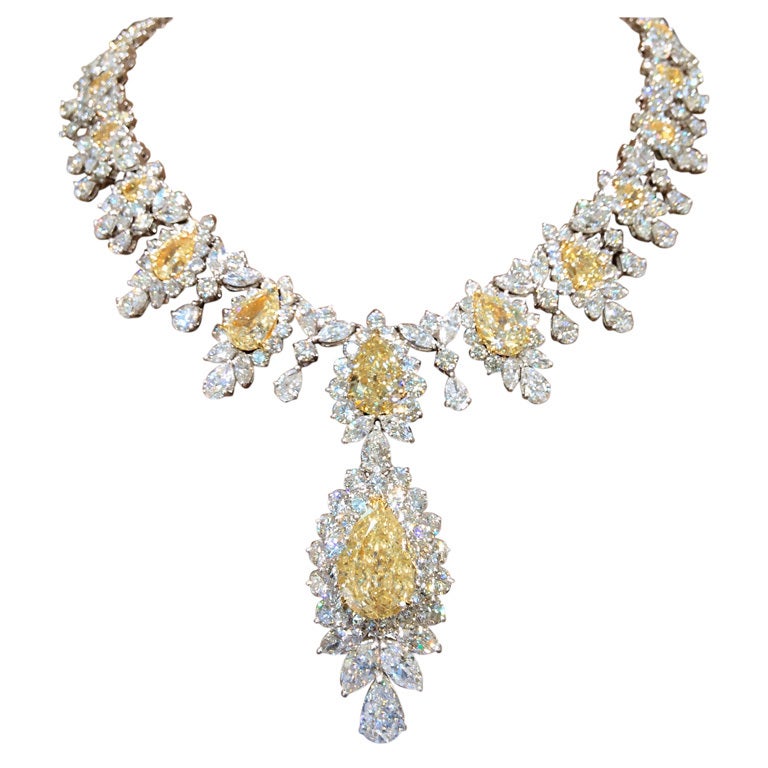
Amal Clooney channels flapper-girl glamour in a vintage fringed dress at Lake Como party
Eat your heart out, Peter Singer.
Or, for that matter, Bernie Sanders.
1stdibs is selling this Carlo Giuliano brooch for just under $300,000.00.
And this yellow and white diamond necklace for $675,000.00.
Amal Clooney channels flapper-girl glamour in a vintage fringed dress at Lake Como party
Eat your heart out, Peter Singer.
Or, for that matter, Bernie Sanders.
Thursday, August 4, 2016
Les Miserables
Hugo spends about the first hundred pages or so of Les Miserables portraying for us the saintliness of Monseigneur Bienvenu, Bishop Myriel of Digne.
He declaims against atheism, which he identifies with Epicurus, Hobbes, and a vision of human life as an egoist war of all against all, and urges an empty theology that is not even a bare theism, and a view of Christ, poverty, and goodness that hears only Jesus's command to give all you have to the poor.
It's rather slow going, but then our author moves on and brilliantly tells the story of Jean Valjean's early life, crime, punishment, early days after his release, and rescue from his profound and repulsive badness by the brave and selfless Bienvenu.
Valjean as a young man lives with and is the sole support of his widowed young sister and her seven children, one a mere infant.
He is an illiterate and unskilled workman relying on day labor for all.
In the midst of one harsh winter there is no work and a day comes when there is nothing for the family to eat, literally nothing.
Valjean, consumed with hunger and desperation, punches through the glass window of a bakery and runs off with a loaf of bread.
The baker pursues and spreads alarm, and he is overtaken and captured.
Within days he is sent in chains to the galleys, sentenced to five years in conditions of inexpressible horror four attempts at escape from which earn him extension of his sentence to 19 years.
Hugo in words and Valjean wordlessly in his heart agree the theft was wrong, but damn society's heartlessness for the poverty and hunger that occasioned it and the appalling injustice of such punishment, and Valjean is crushed into remorseless hatred of society, mankind, and the whole creation.
Hugo ties that same heartless cruelty of society, that appalling punishment, and the profoundly vicious criminality of Valjean they have brought about, all three, to the vision of atheism, or atheist vision of the world, described above.
There is a brief section of those first hundred or so pages on Bienvenu in which the bishop visits a dying old revolutionary.
The fierce man of the people repudiates atheism and the bishop accepts the legitimacy of the Revolution, even conceding his own moral inferiority to the dying hero.
When he is self-righteous, religious, sentimental, moralistic, or even merely political, Hugo is awful.
But he is all the same a magnificent talent, and his narrations of incidents, actions, and events, as well as his revelations of character in them, are wonderful and compelling.
I have read Les Miserables unabridged in English twice and French once.
I am reading it again.
He declaims against atheism, which he identifies with Epicurus, Hobbes, and a vision of human life as an egoist war of all against all, and urges an empty theology that is not even a bare theism, and a view of Christ, poverty, and goodness that hears only Jesus's command to give all you have to the poor.
It's rather slow going, but then our author moves on and brilliantly tells the story of Jean Valjean's early life, crime, punishment, early days after his release, and rescue from his profound and repulsive badness by the brave and selfless Bienvenu.
Valjean as a young man lives with and is the sole support of his widowed young sister and her seven children, one a mere infant.
He is an illiterate and unskilled workman relying on day labor for all.
In the midst of one harsh winter there is no work and a day comes when there is nothing for the family to eat, literally nothing.
Valjean, consumed with hunger and desperation, punches through the glass window of a bakery and runs off with a loaf of bread.
The baker pursues and spreads alarm, and he is overtaken and captured.
Within days he is sent in chains to the galleys, sentenced to five years in conditions of inexpressible horror four attempts at escape from which earn him extension of his sentence to 19 years.
Hugo in words and Valjean wordlessly in his heart agree the theft was wrong, but damn society's heartlessness for the poverty and hunger that occasioned it and the appalling injustice of such punishment, and Valjean is crushed into remorseless hatred of society, mankind, and the whole creation.
Hugo ties that same heartless cruelty of society, that appalling punishment, and the profoundly vicious criminality of Valjean they have brought about, all three, to the vision of atheism, or atheist vision of the world, described above.
There is a brief section of those first hundred or so pages on Bienvenu in which the bishop visits a dying old revolutionary.
The fierce man of the people repudiates atheism and the bishop accepts the legitimacy of the Revolution, even conceding his own moral inferiority to the dying hero.
When he is self-righteous, religious, sentimental, moralistic, or even merely political, Hugo is awful.
But he is all the same a magnificent talent, and his narrations of incidents, actions, and events, as well as his revelations of character in them, are wonderful and compelling.
I have read Les Miserables unabridged in English twice and French once.
I am reading it again.
Tuesday, July 26, 2016
Nature is not interested in anything, but never mind
We are not sculpted, body and soul, to best serve our interests as individual beings.
The greatest and most egregious departures are everything to do with reproduction and nearly everything to do with sex.
And they - body and soul - are not well sculpted for anything, all that much.
Consider, again, sex.
But also consider addiction and the more harmful, even fatal, disorders of appetite.
Consider cancers.
Consider aging.
All which supposes nature sculpts us, body and soul.
So some version of naturalism is true.
Do we know that?
Pshaw.
Go see the Matrix films, again, if your imagination needs a boost.
Thursday, July 7, 2016
Dexter
Binge watched 8 seasons on Netflix.
Empathy never did anybody any good, and the lack thereof does nothing to explain serial killers or mass murderers.
And, seeing how the world goes, empathy allegedly felt by others towards us rarely helps much.
Thoughts occasioned reading Moll Flanders, whose terror of hanging, now she is in Newgate 50 pages from the end of the book, incites thoughts of repentance.
All the same, she might have been right choosing a career of crime, though wrong refusing to quit when ahead.
And such a choice is perfectly consistent with genuine support for stable, well policed, democratic capitalism, as O calls it.
Who would live on the milk of a dry cow?
And even the criminal does not wish to be robbed.
But not too well policed.
What would a world with too much empathy for private property in the means of production look like?
Evolution didn't go there.
Not by a very far piece.
Who works to feed starving Hatians?
Who builds a business or an industry to feed the teeming poor of Asia?
Not Asians.
Nor anyone else.
As for serial killers, mass murderers, and sadists of all types, well, nature regularly throws up monsters.
Some types more than others.
Consider pederasts.
Sometimes they seem common as dirt.
Sunday, May 1, 2016
Ultimate egoism
There is no myth of immortality supported by any major religion that is not utterly egoistic.
And what does that say about the human tragedy?
Monday, February 29, 2016
Living for others
Living for fame, for power, for a place in history.
All of that is living for others.
I had almost thought that love would be the same, but then I thought of the selfishness of love, and of robotics.
How far can you throw yourself away in a life for others if you appreciate the problem of other minds and the radical and insuperable inaccessibility of others, if they exist at all?
Subscribe to:
Posts (Atom)